

I’ve seen remarkable transformations through SpineMed treatment combined with specific exercises. The synergy is powerful – while SpineMed creates the perfect environment for healing compressed discs and nerves, targeted exercises help maintain those improvements and strengthen supporting muscles. I’ve helped thousands of patients overcome stubborn back pain and return to activities they thought were lost forever. Let me share the proven strategies I’ve developed to help you get the most from your SpineMed therapy and reclaim your active lifestyle.
Key Takeaways
- Spinal decompression exercises significantly enhance SpineMed treatment outcomes
- Proper progression from beginner to advanced exercises ensures optimal results
- Consistent exercise combined with SpineMed therapy accelerates recovery
Understanding SpineMed and Exercise Synergy
The science behind SpineMed decompression is fascinating. The treatment creates a gentle separation between vertebrae, effectively relieving pressure on compressed discs and nerves.1 In my practice, I’ve found that while SpineMed alone produces excellent results, combining it with specific exercises amplifies the benefits significantly.
I often explain to my patients that SpineMed creates the optimal environment for healing, while exercises help maintain and enhance these improvements.
When patients ask me why this combination works so well, I tell them to imagine their spine as a complex building. SpineMed acts as the renovation crew, creating space and relieving pressure, while exercises serve as the maintenance team, keeping everything stable and functioning optimally.
Pre-Exercise Guidelines
Before diving into any exercise routine, proper preparation is crucial. Through years of clinical experience, I’ve developed specific guidelines that help ensure safety and maximize results. 2
Essential Exercises by Difficulty Level
Let me walk you through the exercise progression I’ve refined over years of treating patients with various spinal conditions. I’ve organized these into three levels to ensure safe and effective progress.
Beginner Level
The Supine Decompression Position is where I start most of my patients. It’s simple yet effective: lie on your back with your knees bent and a small pillow supporting your lower back. I teach my patients to focus on deep, relaxing breaths while maintaining this position for 3-5 minutes.
Following this, we move to the Modified Cat-Cow Stretches. I’ve adapted this classic yoga pose to better complement SpineMed therapy, making it gentler and more focused on spinal decompression.
Intermediate Level
Once patients master the basics, I introduce the Standing Kitchen Sink Decompression. This exercise has become a favorite among my patients due to its simplicity and effectiveness. I teach them to use their kitchen sink for support while gently decompressing their spine through controlled leaning.
Advanced Level
For patients who’ve built a strong foundation, I introduce more dynamic movements. The Progressive Core Strengthening program I’ve developed specifically complements SpineMed therapy while building crucial spinal stability.
Enhanced Exercise Program for SpineMed Therapy
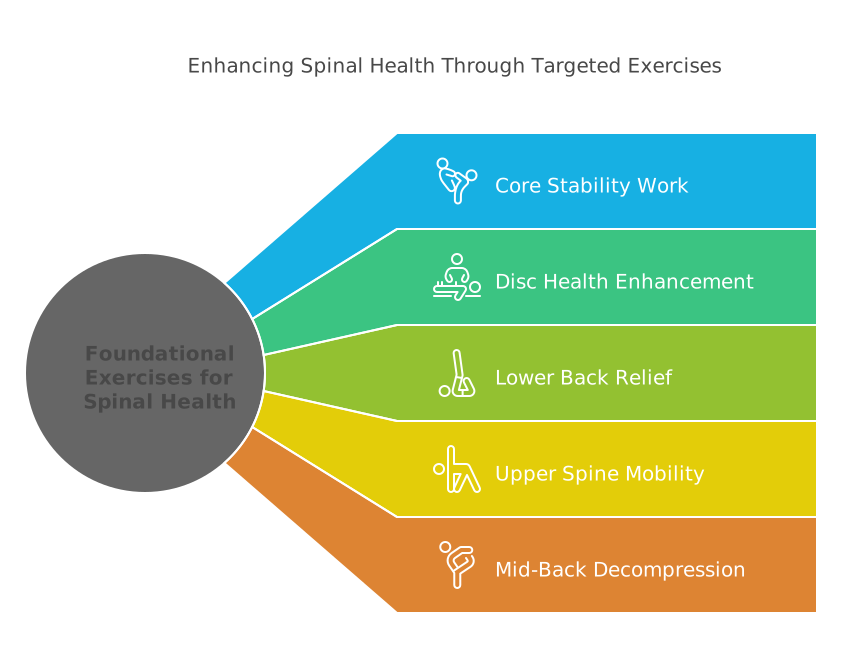
The Foundational Exercises
Specializing in spinal decompression, I’ve developed a comprehensive exercise program that perfectly complements SpineMed treatments. Let me share some of my most effective exercises that have helped countless patients achieve lasting relief.
Core Stability Work
The Bird Dog Progression forms the foundation of our stability training. Starting on hands and knees, you’ll extend the opposite arm and leg while maintaining perfect balance. This engages the deep stabilizing muscles of the spine. My patients often notice improved core control within just a few sessions.3
Disc Health Enhancement
The Modified McKenzie Press-Ups are crucial for disc health when performed correctly. Lying face down, use your arms to create a gentle spinal extension while keeping your hips grounded. Remember, smooth and controlled movements are key here – it’s not about speed or repetitions.
Lower Back Relief
For lower back decompression, I’ve had remarkable success with Pelvic Tilts in the supine position.4 This subtle movement helps retrain core muscles while gently decompressing the spine. Focus on feeling each vertebra making contact with the surface beneath you.
Upper Spine Mobility
The Wall Angel exercise has proven invaluable for my patients who spend long hours at a desk. 5Standing against a wall, perform slow arm movements while maintaining back contact with the wall. This seemingly simple exercise delivers powerful results for upper spine mobility and posture correction.
Mid-Back Decompression
Gentle Thoracic Extensions using a chair provide excellent mobility for the middle back.6 I teach this to most of my SpineMed patients because it’s both effective and practical for home or office use. Focus on controlled movement while feeling the stretch across your upper back.
Exercise Integration Tips
Remember to start gradually with any new exercise program. I typically recommend beginning with one set of each exercise, paying careful attention to form. As your body adapts, we’ll progressively increase repetitions and intensity based on your individual response to treatment.
Best Practices
- Start with lighter movements
- Focus on quality over quantity
- Listen to your body’s signals
- Maintain steady breathing throughout
- Follow your prescribed treatment schedule
Through years of clinical experience, I’ve found this comprehensive approach, combining SpineMed therapy with targeted exercises, provides the most effective path to lasting spinal health.
Remember, while these exercises are generally safe, always consult with your Chiropractor before starting any new exercise program.
Implementation Strategy
Based on my clinical experience, here’s the optimal frequency for each exercise level:
| Level | Times per Day | Duration |
|---|---|---|
| Beginner | 2-3 | 5-10 mins |
| Intermediate | 1-2 | 10-15 mins |
| Advanced | 1 | 15-20 mins |
Lifestyle Integration
Beyond the exercise routine, I work with my patients to integrate spine-healthy habits into their daily lives. This includes maintaining proper posture and ergonomic practices, using supportive office equipment, and practicing correct lifting techniques. I’ve seen remarkable improvements in patients who commit to these lifestyle modifications alongside their SpineMed and exercise program. Understanding the link between posture and back pain is crucial for long-term success – I encourage you to learn more about this connection in my comprehensive guide on posture-related back pain.
FAQs
What is spinal decompression therapy and how does it work?
What types of conditions can be treated with spinal decompression?
What can I expect during a spinal decompression session?
Why is chiropractic care important with SpineMed?
What are the best physical therapy exercises for spinal stenosis?
Conclusion
I’d love to help you develop a personalized treatment plan combining SpineMed and appropriate exercises for your specific condition. Book a consultation with me! Together, we’ll create a comprehensive approach to your spinal health that delivers lasting results.
Remember, investing in your spine health today means investing in your quality of life for years to come. Let’s work together to achieve the pain-free lifestyle you deserve.
- https://pmc.ncbi.nlm.nih.gov/articles/PMC4339166/ ↩︎
- https://pmc.ncbi.nlm.nih.gov/articles/PMC7922504/ ↩︎
- https://pmc.ncbi.nlm.nih.gov/articles/PMC7345922/ ↩︎
- https://pubmed.ncbi.nlm.nih.gov/30295537/ ↩︎
- https://pmc.ncbi.nlm.nih.gov/articles/PMC8386065/ ↩︎
- https://pmc.ncbi.nlm.nih.gov/articles/PMC3881488/ ↩︎
Dr. Mario Tolj, the founder and lead chiropractor at The BodyFix, is a passionate and dedicated healthcare professional. With extensive experience and advanced training in chiropractic care, he is committed to delivering personalized, comprehensive treatments that address the root cause of his patients' concerns. Dr. Tolj's patient-centric approach, combined with his expertise in cutting-edge techniques and whole-body wellness, has helped countless individuals achieve lasting relief and improved quality of life.

Blog Disclaimer: The information provided on The BodyFix Chiro blog is for general informational and educational purposes only and is not intended as medical advice. These articles reflect our opinions and experiences but should not be used to diagnose or treat any health conditions. Always consult with your physician, chiropractor, or other qualified healthcare provider before starting any new treatment, exercise program, or making changes to your health routine. Any actions you take based on information from this blog are entirely at your own risk, and The BodyFix Chiro and its contributors disclaim any liability for the decisions you make based on this information.


